Alternatives To The H-1B Visa: Navigating Latest U.S. Restrictions
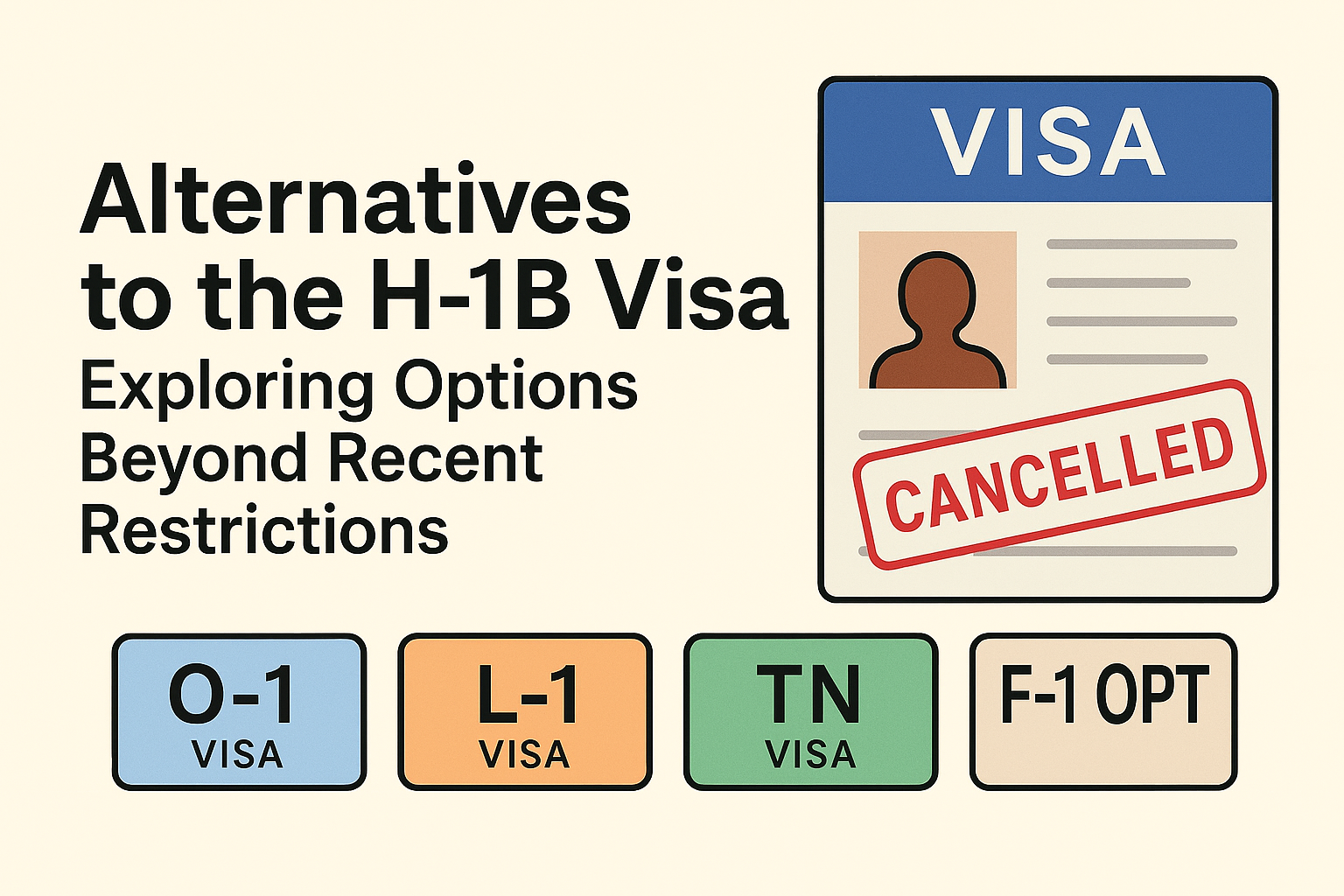
The H-1B visa has long been the gateway for skilled professionals seeking employment in the United States. However, recent restrictions — including canceled visa appointments, extended wait times, and stricter screening measures — have made the program increasingly uncertain. For many foreign workers and U.S. employers, exploring alternative visa pathways is now essential.
🚫 Challenges Facing the H-1B Visa
- Visa Interview Cancellations: Thousands of H-1B renewal appointments were abruptly canceled in late 2025, leaving workers stranded abroad.
- Extended Wait Times: Some applicants face delays stretching into 2026 or 2027.
- Stricter Screening: Mandatory social media checks and additional documentation requirements have slowed approvals.
- Employer Impact: U.S. companies risk losing critical talent as employees remain stuck overseas.
🛤️ Alternatives to the H-1B Visa
- O-1 Visa (Extraordinary Ability)
- For individuals with exceptional achievements in science, business, arts, or athletics.
- No annual cap and renewable in 3-year increments.
- Requires strong evidence of accomplishments.
- L-1 Visa (Intra-Company Transfer)
- For employees of multinational companies transferring to U.S. offices.
- Valid for up to 7 years.
- No lottery system, making it more predictable.
- TN Visa (Canada & Mexico Only)
- Available under USMCA agreements.
- Covers a wide range of professional occupations.
- Renewable indefinitely with quick processing.
- F-1 Visa with OPT/STEM OPT
- For international students studying in the U.S.
- Offers up to 3 years of work authorization post-graduation (for STEM fields).
- Can transition to other visas later.
- Employment-Based Green Cards (EB-2/EB-3)
- Permanent residency option for skilled professionals.
- Requires employer sponsorship and labor certification.
- Longer timeline but provides long-term stability.
📊 Comparison Table
|
Visa Type |
Eligibility |
Duration |
Cap Limit |
Employer Sponsorship |
|
H-1B |
Bachelor’s degree in specialty occupation |
3–6 years |
Yes |
Required |
|
O-1 |
Extraordinary ability |
3 years (renewable) |
No |
Required |
|
L-1 |
Intra-company transfer |
Up to 7 years |
No |
Required |
|
TN |
Canadian/Mexican professionals |
3 years (renewable) |
No |
Required |
|
F-1 OPT |
U.S. graduates |
1–3 years |
No |
Not required |
|
EB-2/EB-3 |
Skilled professionals |
Permanent |
No |
Required |
⚖️ Key Considerations
- Documentation: O-1 and EB visas demand extensive proof of qualifications.
- Employer Support: Most alternatives still require sponsorship.
- Nationality Restrictions: TN visas are limited to Canadians and Mexicans.
- Timing: Green card pathways are slower but more secure long-term.
✅ Conclusion
With the H-1B visa facing unpredictable delays and stricter scrutiny, skilled professionals must adapt by exploring alternative visa routes. Whether through intra-company transfers, extraordinary ability recognition, or student-to-work transitions, these options provide greater flexibility and resilience in navigating U.S. immigration. For employers, diversifying visa strategies ensures continued access to global talent despite regulatory challenges.